
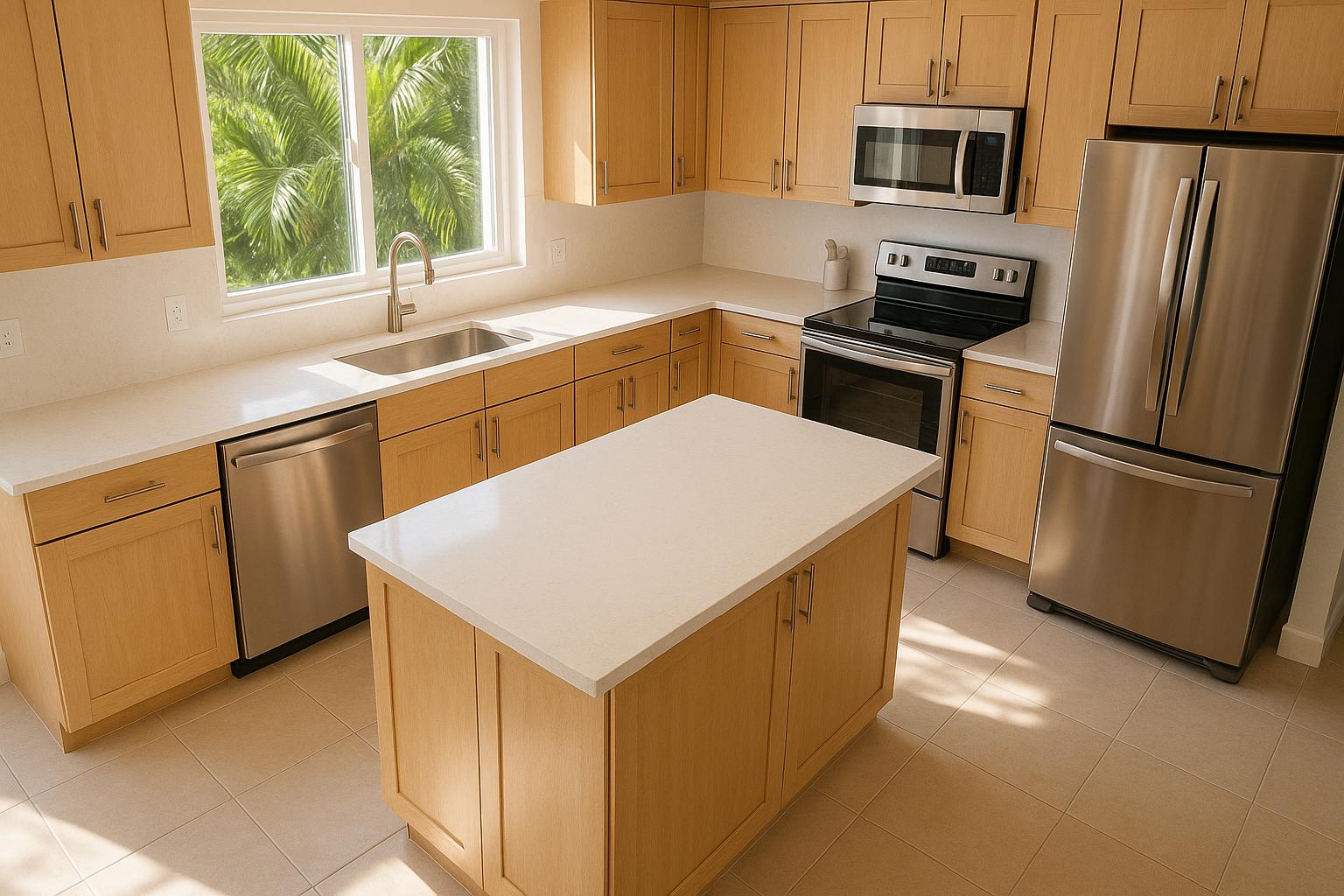
Your Kitchen Layout Sets the Tone for Everything
When homeowners start thinking about a kitchen remodel, they usually jump straight to the fun stuff — countertop materials, cabinet colors, new appliances. But before any of that matters, there's one decision that shapes everything else: your kitchen layout.
The layout determines how you move through the space, how much storage you have, where people gather, and whether cooking feels effortless or frustrating. If you're planning a kitchen renovation in Fort Lauderdale, understanding your layout options is the single most important step you can take before construction begins.
Why Layout Matters More Than You Think
A beautiful kitchen with a bad layout is still a bad kitchen. You can install the most stunning quartz countertops and custom cabinetry money can buy, but if the workflow doesn't make sense, you'll feel it every single day.
Good kitchen design follows what professionals call the work triangle — the relationship between your sink, stove, and refrigerator. These three points should be close enough for efficiency but far enough apart that you're not bumping into people or appliances. Your layout is what makes that triangle possible.
Beyond the work triangle, your layout also affects:
- Traffic flow — Can people walk through without getting in the cook's way?
- Storage capacity — Do you have enough cabinets and counter space for how you actually use your kitchen?
- Social interaction — Can you talk to family or guests while you prep dinner?
- Natural light — Does the layout take advantage of your windows?
Many Fort Lauderdale homes, especially those built in the 1970s through 1990s, have kitchens with closed-off or cramped layouts that don't reflect how families use the space today. A remodel is your chance to fix that.
The Most Popular Kitchen Layouts Explained
The Galley Kitchen
A galley layout features two parallel walls of cabinets and countertops with a walkway in between. It's one of the most space-efficient designs available.
Best for: Smaller homes, condos, and townhomes where square footage is limited.
Pros: Excellent workflow for one cook, maximizes every inch of wall space, and tends to be more affordable to build out since plumbing and electrical stay on two walls.
Cons: Can feel narrow or closed off, and it's not ideal for multiple people cooking at the same time. There's usually no room for an island or eat-in area.
The L-Shaped Kitchen
This layout uses two adjacent walls that form an L. It's one of the most versatile and popular designs for open-concept homes.
Best for: Medium to large kitchens, especially those that open into a dining or living area.
Pros: Creates a natural work triangle, leaves the center of the room open for an island or dining table, and works beautifully in open floor plans.
Cons: Corner cabinets can be tricky to access without the right hardware, and very large L-shaped kitchens can spread the work triangle too far apart.
The U-Shaped Kitchen
Three walls of cabinetry and countertops surround the cook on three sides. This is the powerhouse layout for people who take cooking seriously.
Best for: Dedicated cooks who want maximum counter and storage space.
Pros: Tons of storage, great work triangle, and keeps everything within arm's reach.
Cons: Can feel enclosed if the kitchen is on the smaller side. It also requires careful planning to avoid a cluttered or dark feel.
The Island Layout
An island isn't a layout by itself — it's an addition to an L-shaped or open kitchen that adds a freestanding counter in the center of the room. But for many Fort Lauderdale homeowners, the island is the centerpiece of the remodel.
Best for: Kitchens with enough floor space to allow at least 36 to 42 inches of clearance on all sides of the island.
Pros: Adds prep space, seating, and storage. It creates a natural gathering spot and can house a sink, cooktop, or dishwasher.
Cons: Requires adequate square footage. Forcing an island into a small kitchen makes the space feel cramped and kills the workflow.
The Peninsula Layout
Think of a peninsula as an island that's attached to a wall or existing counter on one end. It gives you many of the benefits of an island without needing as much open floor space.
Best for: Kitchens that are too small for a full island but still need extra counter space or a casual eating area.
Pros: Defines the kitchen area in an open floor plan, adds counter space and seating, and works in tighter layouts.
Cons: Limits traffic flow to one entry point into the kitchen, which can be an issue during parties or busy mornings.
How to Decide Which Layout Is Right for Your Home
Choosing the right layout comes down to three things:
- Your space. Measure your kitchen carefully. Note where windows, doors, and plumbing lines are located. Some layouts simply won't work in certain rooms without major structural changes.
- Your lifestyle. Do you cook elaborate meals every night, or do you mostly reheat and entertain? Do your kids do homework at the counter? Does your family gather in the kitchen? Your daily habits should drive the design.
- Your budget. Layouts that keep plumbing and electrical in roughly the same locations cost significantly less than those that require moving gas lines, drains, or load-bearing walls. A good contractor will help you understand these trade-offs upfront.
If you're unsure, start by thinking about what frustrates you most about your current kitchen. Is it lack of counter space? Poor traffic flow? No place to sit? The answer usually points you toward the right layout.
A Note on Open-Concept Conversions
Many homeowners in Fort Lauderdale are knocking down walls to create open-concept kitchens that flow into living and dining areas. This is one of the most popular requests we see at Citadel Foundation Contractors, and it can completely transform how a home feels.
However, open-concept conversions require careful structural evaluation. Some walls are load-bearing, which means removing them involves installing support beams — a job that requires permits and experienced professionals. It's absolutely doable, but it's not a DIY project.
Start With a Plan, Not a Pinterest Board
We love when clients come to us with inspiration photos. But the most successful kitchen remodels start with a clear understanding of the space, the layout options, and the homeowner's real priorities. That foundation is what turns a collection of pretty pictures into a kitchen that actually works for your life.
If you're considering a kitchen remodel in Fort Lauderdale or the surrounding areas, Citadel Foundation Contractors can help you evaluate your current layout, explore what's possible, and build a kitchen that fits both your home and your lifestyle. Reach out to schedule a consultation — we'll walk through your space together and help you make the right call before a single cabinet is ordered.