
Why Knowing the Process Matters
A kitchen remodel is one of the most impactful upgrades you can make to your home — but it's also one of the most involved. If you've never been through a major renovation before, the process can feel overwhelming. What happens first? When will you lose access to your kitchen? How long will each phase take?
Understanding the step-by-step process ahead of time takes the mystery out of your project and helps you plan around the disruption. Whether you're updating a dated galley kitchen in Wilton Manors or doing a full gut renovation in a Fort Lauderdale waterfront home, here's what to expect from start to finish.
Step 1: Design and Planning
Every successful kitchen remodel starts long before anyone picks up a hammer. The design and planning phase is where you and your contractor align on the vision, the budget, and the scope of work.
During this stage, you'll typically:
- Discuss your goals, must-haves, and deal-breakers
- Review layout options and finalize the floor plan
- Select materials — cabinets, countertops, flooring, backsplash, fixtures
- Get a detailed estimate and sign a contract
- Pull any necessary building permits
This phase can take anywhere from two to six weeks depending on how quickly decisions are made and whether permits are required. In Fort Lauderdale, permits are commonly needed for electrical, plumbing, and structural work, so it's important to factor in that timeline early.
Pro Tip
Don't rush through material selections. Backordered countertops or cabinets are one of the most common causes of project delays. Your contractor should help you identify lead times so you can order early.
Step 2: Demolition
Once permits are approved and materials are ordered, the real work begins. Demolition is where your old kitchen gets stripped down — cabinets removed, flooring torn out, old fixtures disconnected.
This is the messiest and loudest part of the process, but it typically moves fast. Most kitchen demolitions take just one to three days. Your contractor should protect surrounding areas of your home with plastic sheeting and dust barriers to keep the mess contained.
Important: You'll lose access to your kitchen at this point. Set up a temporary kitchen station in another room with a microwave, mini fridge, and paper plates. It's a small inconvenience that makes the weeks ahead much more manageable.
Step 3: Rough-In Work (Plumbing, Electrical, Framing)
After demo, the behind-the-walls work happens. This is called the rough-in phase, and it includes:
- Moving or adding plumbing lines for sinks, dishwashers, or refrigerator water lines
- Updating electrical wiring, adding outlets, or relocating switches
- Any structural changes like removing a wall or adding a header beam
This stage is critical because it sets the foundation for everything that follows. In South Florida, rough-in work usually requires a building inspection before the project can move forward. Your contractor should coordinate these inspections so there's no unnecessary downtime.
Rough-in work generally takes one to two weeks depending on how much is being changed.
Step 4: Drywall, Patching, and Prep
Once inspections pass, the walls get closed up. New drywall is hung where needed, seams are taped and mudded, and surfaces are sanded smooth. If your remodel involved moving walls or opening up the layout, this step is especially important for creating a clean, finished look.
This phase usually takes three to five days, including drying time between coats of joint compound.
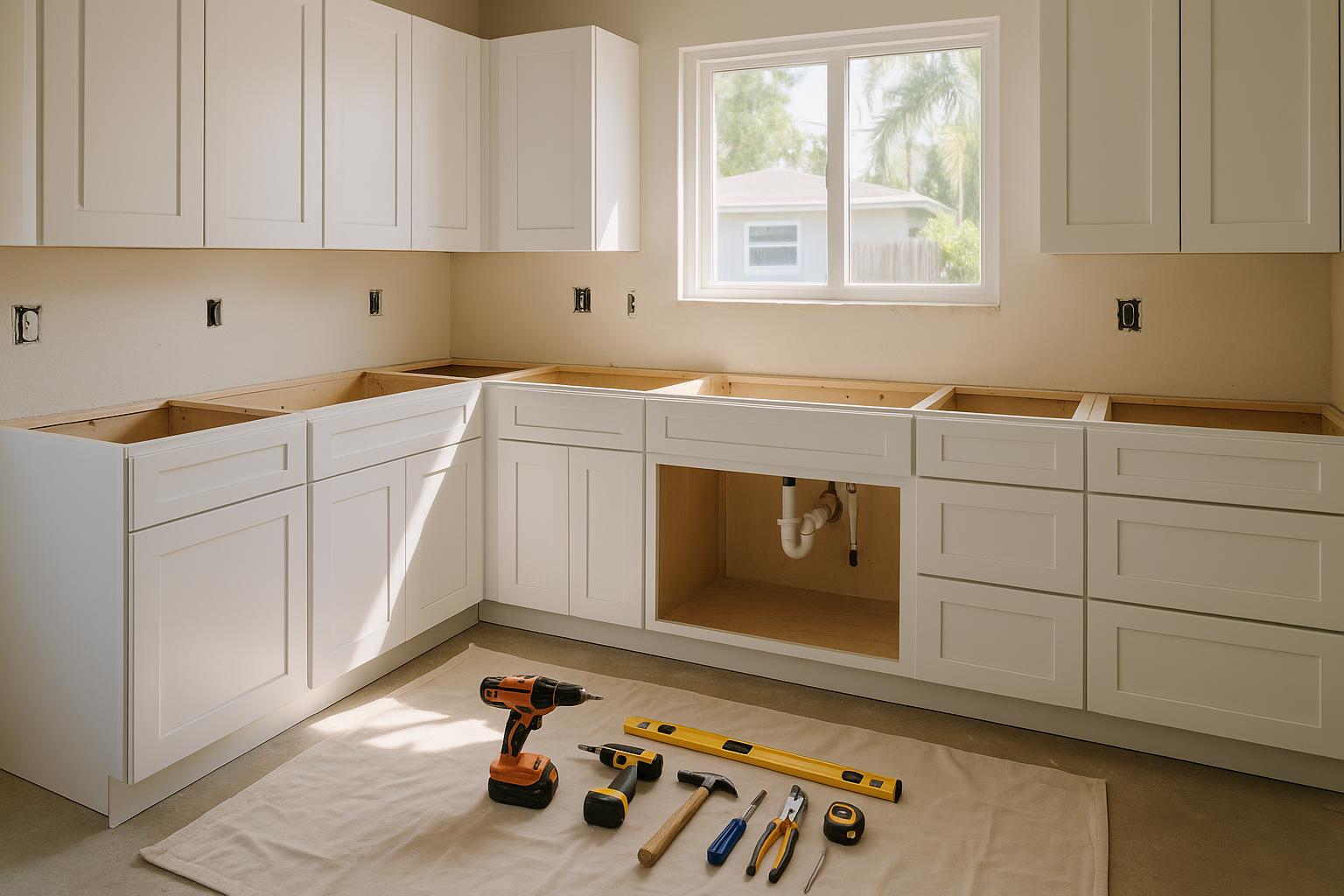
Step 5: Cabinet and Countertop Installation
This is the stage where your new kitchen really starts to take shape. Cabinets go in first, carefully leveled and secured to the walls. If you're going with custom cabinetry, your installer will ensure every door aligns and every drawer glides smoothly.
After the cabinets are set, countertops are templated (measured precisely) and then fabricated. Depending on the material — granite, quartz, marble — fabrication can take one to two weeks after templating. Once ready, the countertops are installed in a single day in most cases.
This is often the phase Fort Lauderdale homeowners get most excited about because the room finally starts looking like a kitchen again.
Step 6: Flooring Installation
Flooring can be installed before or after cabinets depending on the material and the contractor's approach. Tile, luxury vinyl plank, and hardwood are all popular choices in South Florida kitchens. Each has different installation timelines:
- Tile: Two to four days including grouting and curing
- Luxury vinyl plank: One to two days
- Hardwood: Two to three days plus finishing time
Your contractor should recommend a flooring material that handles the humidity and moisture levels common in homes across Pompano Beach, Oakland Park, and the broader Fort Lauderdale area.
Step 7: Finishing Touches
The final phase brings everything together. This includes:
- Backsplash installation
- Interior painting and trim work
- Light fixture and hardware installation
- Plumbing fixture hookups — faucets, garbage disposals, dishwashers
- Appliance delivery and installation
- Final cleaning and walkthrough
This stage typically takes one to two weeks. It's detail-oriented work, and a good contractor won't rush it. The final walkthrough is your chance to flag anything that needs adjustment before the project is officially complete.
How to Prepare for a Smooth Kitchen Remodel
Knowing the process is half the battle. Here are a few additional tips to keep things running smoothly:
- Set up a temporary kitchen early. Don't wait until demo day. Have your backup cooking station ready to go.
- Make material selections as early as possible. Delayed decisions lead to delayed timelines.
- Communicate openly with your contractor. Ask questions, raise concerns, and stay involved without micromanaging.
- Plan for the unexpected. Older Fort Lauderdale homes sometimes reveal surprises behind the walls — outdated wiring, water damage, or code issues. A contingency budget of 10 to 15 percent helps you handle these without stress.
- Keep pets and kids safe. Construction zones are no place for curious paws or little hands. Plan accordingly during the active work phases.
Ready to Start Your Kitchen Remodel?
A kitchen renovation doesn't have to be stressful when you know what's coming. At Citadel Foundation Contractors, we walk Fort Lauderdale homeowners through every step of the process — from initial design to final walkthrough — so there are no surprises along the way.
If you're thinking about transforming your kitchen, reach out for a free consultation. We'll help you understand the scope, the timeline, and the investment so you can move forward with confidence.